
Common myths and facts about the new Via Toll road toll system
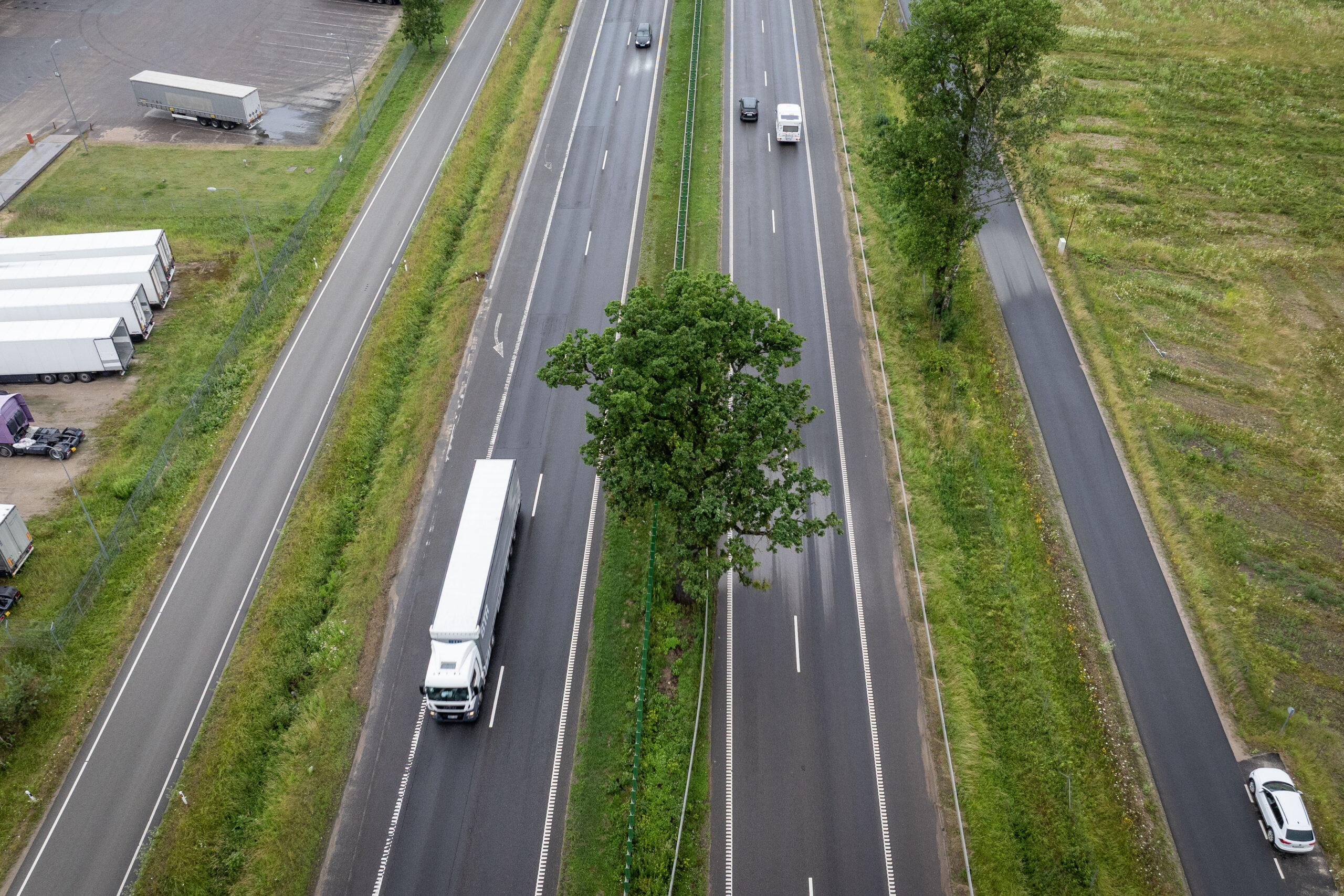
The Via Toll electronic road toll system is currently being rolled out in Lithuania and will come into operation on 1 January 2027. Via Lietuva, the road infrastructure company implementing the project, is addressing the most common concerns and providing the facts about the system, the project’s objectives and the benefits for the country’s residents.
“Although there is still around half a year to go before the Via Toll system is launched, drivers and vehicle owners are already taking an interest in how it works and have often formed some preconceived misconceptions. This system is a more modern, convenient and transparent way of collecting road user charges, which until now have been collected through the sale of vignettes. This charge will continue to apply to operators of goods and passenger transport, whilst drivers of private cars will not be required to pay it,” says Andrius Teškevičius, Programme Manager for the Via Toll programme within the Strategy and Development Group at Via Lietuva.
A company representative addresses the most common myths and misconceptions about the new Via Toll system. All key information regarding the progress of the project is published on the website vialietuva.lt/via-toll.
Myth: “This is a new tax for all drivers”
Fact: The e-tolling system does not introduce any new taxes; furthermore, this toll will apply only to the same vehicle categories as at present.
“The road user charge has been in force in Lithuania for over a decade. It currently applies to vehicles in categories M2, M3, N1, N2 and N3 that use toll roads of national importance and are required to purchase vignettes. Once the Via Toll system comes into operation, there will be no new charges; instead, the method of calculating the current charge will change,” says A. Teškevičius.
Instead of vignettes, which are paid for a specific period of road use, from 1 January 2027 there will be a switch to charging based on the distance driven. This model helps to ensure fairer and more proportionate taxation of commercial transport operators and is compatible with the so-called Eurovignette Directive on distance-based transport taxation.
Myth: “The state simply needs to raise more money for the budget”
Fact: The funds collected through the road toll system will go directly into the State Road Fund, which is used to finance road maintenance and construction.
According to A. Teškevičius, around EUR 70 million is currently collected annually from vignettes, and once the Via Toll system is introduced, it is estimated that the amount collected could reach around EUR 110 million per year in the first year, and should increase thereafter.
“The most important thing is that these funds will be channelled into the State Road Fund, which finances road repairs, reconstruction and bridge maintenance. Greater and more consistent direct funding will contribute to better road quality across the country, and all the country’s residents will benefit from this,” notes a representative of Via Lietuva.
Myth: “Everything will become more expensive because hauliers will pass the charge on to consumers”
Fact: The Via Toll system is designed to ensure fairer and more proportionate taxation of commercial transport; however, road tolls do not account for a significant proportion of logistics costs.
As A. Teškevičius points out, a road user charge is already in place today, so in most cases it should be included in transport costs. The new Via Toll system changes the principle of toll calculation – moving from payment for a selected period to a charge based on the distance driven.
“With the transition to the new charging principle, the toll will be directly linked to actual road use – longer journeys will incur a higher charge, whilst shorter journeys will result in a lower toll. Distances in Lithuania are relatively short, so in most cases logistics costs do not account for a significant proportion of the final price of products. Therefore, the impact of this change should be minimal,” he says.
Once this change has been implemented, thereby ensuring sufficient investment in the maintenance and development of road infrastructure, transport costs can be expected to fall in the long term – roads will be in better condition, with fewer potholes, and road surfaces will need to be repaired less frequently, making logistics more efficient.
Myth: “Once again, nothing will work – as is always the case with digital services”
Fact: The Via Toll system is being implemented by Kapsch TrafficCom, a reputable Austrian company with extensive experience in carrying out such projects.
The electronic road toll system in Lithuania is being implemented by the Austrian company Kapsch TrafficCom, whose solutions are already operating successfully in many European countries, including Austria, Switzerland, France, Spain and the Scandinavian countries.
According to A. Teškevičius, the system is capable of serving up to 40,000 unique users simultaneously and is therefore designed to handle high traffic volumes.
Myth: “The system will be able to track road users, which poses a threat to people’s privacy”
Fact: The Via Toll system is designed to calculate road tolls; it will not collect or store data on people’s movements or related information.
According to a representative of Via Lietuva, the Via Toll system will only record the data necessary to calculate tolls based on the distance driven by a vehicle. The collection and use of data will be carried out in accordance with current personal data protection requirements.
“The system will not monitor people’s movements or collect data on their journeys. Its purpose is to calculate the road user charge for operators of commercial vehicles as accurately and fairly as possible,” says A. Teškevičius.
As previously announced, all data relating to the Via Toll system will be stored at the Telecentras State Data Centre, which meets the highest security standards.
Myth: “The road toll system amounts to double taxation, as roads are already funded through fuel excise duty.”
Fact: Various sources are used to fund roads, and these complement one another.
Road maintenance and construction are funded from various sources, with more than EUR 800 million earmarked for this purpose in 2026. It is estimated that maintaining the current condition of the roads and gradually improving them would require funding of around EUR 1 billion per year.
The State Road Fund, which began operating this year, will in future help to bridge the gap between current and required funding. Tolls collected from road users via the Via Toll system are expected to become a significant source of funding for this fund.
“At present, approximately half of the revenue from fuel excise duties is allocated to road infrastructure, so other sources are also needed to ensure adequate funding. Furthermore, vehicles transporting freight on international routes may cross Lithuanian territory without refuelling, so a toll based on the distance driven is fairer, more transparent and more effective in such cases,” notes a representative of Via Lietuva.
Myth: “You’ll need extra equipment to use the Via Toll system”
Fact: No additional investment is required to use Via Toll – all you need is the app
The new Via Toll system will support several modes of use, and vehicle operators or drivers will be able to choose the one that suits them best. The simplest way to use the system without any additional investment is to download and install the free Via Toll app on your phone. You will need to launch it before each journey on toll sections of public roads so that the system can calculate the distance driven and work out the toll amount accordingly.
“Those who do not have a smartphone or who will use toll road sections only very rarely will be able to purchase a single-journey ticket. This can be done by logging into the Via Toll self-service portal,” says a representative of Via Lietuva.
Meanwhile, transport operators managing larger fleets who use the services of OBU equipment providers will be able to request that these solutions be integrated with the Via Toll system. In such cases, the toll for travelling on toll road sections will be calculated automatically, and no additional action will be required during the journey.